

Breast Augmentation in Birmingham, Alabama
Breast Augmentation Special
$2,500 for Saline Breast Implants *
$3,500 for Silicone Breast Implants *
* plus nominal facility fee
Free Gift with Natrelle Breast Implants
Breast Augmentation at Hedden & Gunn
Breast Augmentation, or breast enlargement, is a safe and popular cosmetic procedure performed to enhance or restore the size and shape of the breasts. The majority of women who undergo breast augmentation successfully achieve an improved appearance, a boost to their self-image and an increase in self-confidence.
During breast augmentation surgery (also known as augmentation mammaplasty), breast implants are inserted into a pocket behind the breast tissues, positioned beneath the nipples and the incisions closed with stitches. The implants expand the breast area to provide a fuller appearance, more cleavage and an enhanced feminine contour. Breast augmentation was the second most popular surgical cosmetic procedure for women in 2021, with more than 364,000 procedures performed, according to the American Society for Aesthetic Plastic Surgery.
Call 205-980-1744 or 1-800-433-3366 today to schedule your breast augmentation consultation with expert surgeons William Hedden MD, Stephen Gunn MD or Joshua Halka MD and learn more about breast enhancement in Birmingham, Alabama.
Breast Augmentation Quick Facts
- Best Candidates: Women who are seeking to improve their appearance with fuller breasts
- Length of Procedure: 1 to 2 hours
- Inpatient/Outpatient: Usually Outpatient
- Anesthesia: General or local with sedation
- Results: Permanent — possible future implant replacement
Types of Breast Implants
Breast implants come in different shapes, sizes and projections to accommodate women with different body types and aesthetic goals. Round implants with a smooth surface are currently used for the majority of breast augmentations, though some women choose contoured, or "anatomical," implants that have a textured surface. Please visit our Breast Implants FAQ to learn more about the sizes, projections, shapes and textures that are available.
Both saline and silicone gel breast implants are made with a silicone elastomer (rubber) shell. Saline implants are inserted empty and then filled with saline solution at the time of surgery. Silicone gel implants are pre-filled with a cohesive, gelatin-like substance.
Silicone gel implants were approved by the U.S. Food and Drug Administration for both cosmetic and reconstructive breast surgery in November 2006. The decision ended a 14-year period during which silicone gel implants were not available in the U.S. for cosmetic use. Saline implants are also FDA-approved.
If you decide to proceed with surgery with Hedden & Gunn Plastic Surgery in Birmingham, Alabama, you will work closely with your surgeon and our staff to finalize your size choice and determine the style of breast implants that will enable you to meet your goals for breast augmentation.
How Breast Augmentation is Performed
The incision can be made beneath the breast (inframammary fold incision), around the nipple (peri-areolar incision), in the armpit (transaxillary incision) or at the upper rim of the belly button (transumbilical incision). Incisions for saline breast implants are usually only about 1 inch long because the implant is rolled up, inserted empty and then filled with sterile saline solution. Incisions for silicone gel implants are generally longer because the implants are pre-filled. The belly button, or transumbilical incision (also called Transumbilical Breast Augmentation, or TUBA), is a relatively new technique that is quickly gaining in popularity.
The implant is inserted to a placement site either over, partially under, or completely under the pectoralis muscle in the chest. Over the muscle placement tends to create more distinct cleavage and a more rounded appearance. Implants placed partially under the muscle are usually less rounded and provide a more natural shape in the upper portion of the breasts.
The surgery is usually performed on an outpatient basis and takes from 1 to 2 hours to complete. General anesthesia is usually administered to ensure that the patient sleeps through the entire procedure.
Best Candidates
The best candidates for breast augmentation are women who are in good health and want to enhance their appearance with fuller breasts that have a natural look and feel.
Generally, the best candidates for breast augmentation are women:
- Are in good physical and psychological health.
- Are well-informed about treatment options and have realistic expectations.
- Want to improve their feminine contour with larger and more shapely breasts.
Many women simply feel that their breasts are too small and that a larger breast size would enhance the overall balance, proportions and contour of their body. Clothes may not fit as well as they would like or they may feel self-conscious in swimwear. Other women consider breast augmentation because of a loss of breast volume caused by pregnancy, losing weight or aging. Women who have a notable degree of assymetry, or breasts that are not exactly the same size, may consider breast augmentation to enlarge the smaller breast.
If you believe that you may be a good candidate for breast augmentation, please contact our Alabama plastic surgery practice at 205-980-1744 or 1-800-433-3366 to schedule a consultation today. Your surgeon and our highly-trained medical staff can evaluate your circumstances, explain anything about the procedure you don't understand, answer all of the questions you have about breast augmentation and help you decide if the procedure is right for you.
Breast Augmentation Risks
All surgeries include some degree of risk, including infection, discomfort and an adverse reaction to the anesthesia. There are also specific risks associated with surgery using breast implants, including capsular contracture (hardening of the breast). In general, the more serious occur rarely, and most complications involve an extension of the recovery period rather than any permanent effect on your final result.
To minimize your risk of developing a complication, carefully follow all of your instructions both before and after the procedure. Contact your surgeon's office immediately if you experience any symptoms you believe may indicate a complication.
Common Risks
The most common risks and possible complications associated with breast enlargement surgery include:
- Capsular contracture — Under ideal circumstances, the pocket created for the implant maintains its original dimensions and the implant "rests" inside, remaining soft and natural. Capsular contracture occurs when the scar capsule shrinks or contracts and squeezes the implant. Surgical correction is usually not suggested in cases of minor contraction.
- Implant rupture — Occurs when saline solution or silicone gel leaks from the breast implant due to a break in the implant covering. The causes of implant rupture include wearing out of the implant over time, damage during surgery and physical trauma to the breast. An MRI to screen for rupture is recommended 3 years after the procedure and every 2 years thereafter.
- Hematoma — Occurs when blood escapes from the blood vessels and flows into a space under the skin, forming a mass that may cause swelling, pain and bruising. Your body will absorb small hematomas, but larger ones may require aspiration, drainage or even surgical removal.
- Infection — Post-operative infection is uncommon, but possible as with any surgery. Intravenous antibiotics administered during surgery and oral antibiotics prescribed for afterward reduce the risk of infection to a minimum. Most infections that do occur are mild and easily treated with antibiotics.
- Discomfort/pain — Most women experience some degree of discomfort or pain in the breast and chest area. This pain is usually mild, easily controlled with pain medications and subsides rapidly during the healing process. Be sure to call your surgeon's office if you experience pain that is severe or persisting after the surgery.
- Changes in sensation — Feeling in the breast skin or nipples may decrease or increase following breast surgery. These changes in sensation usually disappear after a few weeks, but can take up to a year.
- Interference with mammography — All women over 40, including those with breast implants, should get regular mammograms. Breast implants can interfere with the detection of early breast cancer during a mammogram, which is a low-dose x-ray examination of the breast. Technicians experienced in performing mammograms on women with implants use a special technique called "implant displacement views" that require more x-ray views to see as much of the breast tissue as possible. Still, implants may hide some breast tissue from the x-rays.
- Wrinkling/rippling — Visible wrinkling or rippling under the skin is more noticeable with the use of textured implants. Occasionally, the edge of the implant can be felt. These problems are usually mild and require no treatment. Wrinkles frequently improve or even disappear within a year.
Breast Augmentation Scars
Scars left by breast augmentation surgery as part of the body's natural healing process are usually small and well-hidden. If the incision is made in the crease where the breast meets the chest, the scar should be invisible unless the breast is lifted upward. If the incision is made around the areola, the scar blends in with the change in skin tone from the areola to the lighter skin of the breast. If an incision in the armpit or belly button is used, only a tiny scar is left in the skin of the armpit or at the rim of the navel. Regardless of the incision technique used, your surgeon will make the incisions so that the resulting scars are as discreet as possible.
Breast Augmentation Consultation

If you decide that you might benefit from breast enlargement, the first step is to locate a qualified plastic surgeon and schedule a consultation. Please call 205-980-1744 or 1-800-433-3366 to schedule a consultation with our Alabama plastic surgeons at our Greystone location near Birmingham and Hoover.
During this meeting, Dr. William Hedden, Dr. Stephen Gunn or Dr. Joshua Halka will fully address all of your questions, perform an evaluation and offer advice on how to achieve your desired results. Your surgeon will examine your breasts, noting their size and shape, their symmetry and the amount of cleavage (the distance between the breasts). He will also assess the characteristics of your skin and any other physical factors that could affect the surgery.
Much of the discussion will be about your goals and expectations for your target breast size. your surgeon and our staff will also address costs and financing, risks and possible complications, the types of breast implants, surgery details and the details of the recovery process.
Please be prepared to discuss your overall health and medical history. Bring a list of all of your current medications — prescription, over-the-counter and herbal. Include any vitamins you take. Also remember to bring a list of previous surgeries, including any type of procedure involving the breasts.
If you decide to proceed with breast augmentation, Hedden & Gunn Plastic Surgery will provide you with specific instructions on how to prepare for your breast augmentation. These instructions will include guidelines for eating, drinking, and medications and vitamins to take or avoid before and after surgery.
Breast Augmentation Recovery
Prepare your home by taking things that you have to reach up for (for example, things on a high shelf or cupboard) and put them on a countertop or table. Stretching for items over your head will be uncomfortable for about a week after surgery. Have foods available that are light on the stomach, and have comfortable clothing ready, including loosely-fitting shirts that open in the front (avoid pull-over shirts). Have a couple of cotton sports bras without underwire or post-surgical bras on hand to provide comfort and support for the first few weeks after surgery.
Normal symptoms experienced after breast augmentation surgery are usually minor and subside rapidly with proper care, as outlined in your post-operative instructions. These symptoms include moderate swelling and bruising, mild to moderate discomfort and pain, crusting along incision lines, itching, numbness and tingling, burning or shooting pains.
Contact your plastic surgeon's office immediately if you experience any severe swelling, bruising or pain that is not controlled by your prescribed pain medication. Use a thermometer to take your temperature frequently in the first few days after surgery, as fever can be a sign of infection.
Always follow your plastic surgeon's advice on when you can resume your normal activities. Most women are up and around the day after breast augmentation surgery and can return to work or resume most normal activities within a few days. More vigorous physical activity, such as upper body weight training, should be delayed for up to 6 weeks.
Nipple sensation is normal in some women immediately after breast augmentation surgery. Others may experience numbness or hypersensitivity as the nerves regenerate. For most women, sensation levels return to normal over time. Use a topical anesthetic cream, or numbing cream, for relief if your nipples become overly sensitive.
Most women are able to successfully breastfeed following breast augmentation. If you may want to breastfeed in the future, let the plastic surgeon know when you go in for your consultation. The inframammary fold and transaxillary incisions may be the best choices for women who plan to breastfeed because the milk ducts located behind the nipple are left relatively undisturbed.
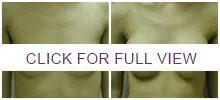
Before & Afters
Procedure Videos

Contact Us Today to Schedule Your Consultation
Please contact our Birmingham, Alabama practice for more information about breast augmentation at Hedden & Gunn Plastic Surgery.
Call Today! 205-980-1744 or 800-HEDDENMD (433-3366)